Home
/ Adverb Of Time - Present Tense Time Adverbs Used With The Present Tense Adverbs Tenses Learn English, She came at around 9.30 am.
Adverb Of Time - Present Tense Time Adverbs Used With The Present Tense Adverbs Tenses Learn English, She came at around 9.30 am.
Adverb Of Time - Present Tense Time Adverbs Used With The Present Tense Adverbs Tenses Learn English, She came at around 9.30 am.. She sang loudly ( loudly modifies the verb sang , indicating the manner of singing) She stayed for a while then left. Definition of adverb of time: Apparently, the sky is getting cloudy. She is singing a song.
A word that tells the time of an action is called adverb of time. If you pay your bills on time, you can have a good credit score. She sang loudly ( loudly modifies the verb sang , indicating the manner of singing) Such a word is called an adverb. Apparently, the sky is getting cloudy.
Types Of Adverbs And Adverb Word Order from english.lingolia.com A sentence adverb starts the sentence and modifies the whole sentence. (this is a formal way to use the adverb later. Adverb clauses modify the independent clause in a sentence. Definition of adverb of time: Such a word is called an adverb. She is singing a song loudly. Adverb clause at the beginning of a sentence. She came at around 9.30 am.
She sang loudly ( loudly modifies the verb sang , indicating the manner of singing)
She stayed for a while then left. Jun 25, 2013 · an adverb clause of time shows when something happens. Adverb clauses are different from phrases, which do not require a subject and a verb the way a clause does. She sang loudly ( loudly modifies the verb sang , indicating the manner of singing) She is singing a song. She came at around 9.30 am. If you pay your bills on time, you can have a good credit score. Examples of adverb of time: Adverb clause at the beginning of a sentence. Notice how the statement sounds like it belongs in a. Apparently, the sky is getting cloudy. They answer the question 'when. A word that tells the time of an action is called adverb of time.
At one time, the use of the word hopefully as a sentence adverb (e.g., hopefully, i'll get this job) was condemned. She came at around 9.30 am. People continued to use it though, and many style guides and dictionaries now accept it. A word that tells the time of an action is called adverb of time. While adverb clauses are slightly more.
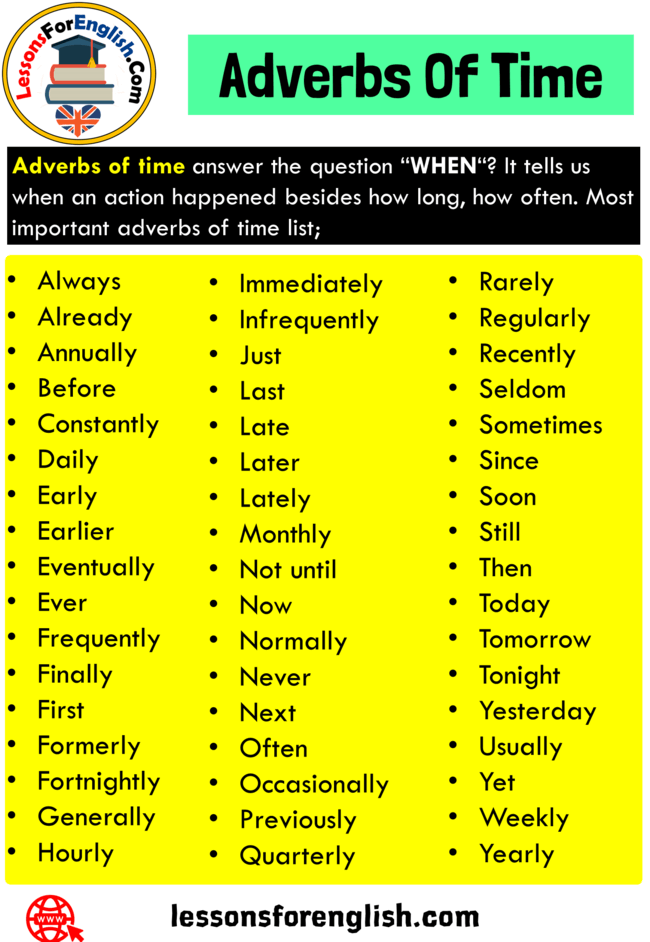
Adverbs Of Time Definition And 51 Example Words Lessons For English from lessonsforenglish.com An adverb used in this way may provide information about the manner, place, time, frequency, certainty, or other circumstances of the activity denoted by the verb or verb phrase. Adverb clauses modify the independent clause in a sentence. As you read the following adverb clause examples, you'll notice how these useful phrases modify other words and phrases by providing interesting information about the place, time, manner, certainty, frequency, or other circumstances of activity denoted by the verbs or verb phrases in the sentences. You can change the position of an adverb of time to lend emphasis to a certain aspect of a sentence. Examples of adverb of time: She is singing a song loudly. Note that all adverb clauses are subordinate clauses. If you pay your bills on time, you can have a good credit score.
Whether you like it or not, you have to go to bed now.
Adverb clauses are different from phrases, which do not require a subject and a verb the way a clause does. Notice how the statement sounds like it belongs in a. They add more details, like time, location, reason, condition, degree, concession, and manner. An adverb used in this way may provide information about the manner, place, time, frequency, certainty, or other circumstances of the activity denoted by the verb or verb phrase. A sentence adverb starts the sentence and modifies the whole sentence. A word that tells the time of an action is called adverb of time. If you pay your bills on time, you can have a good credit score. Adverb clause at the beginning of a sentence. Whether you like it or not, you have to go to bed now. I slept late the previous night. Hopefully, we will win the match. At one time, the use of the word hopefully as a sentence adverb (e.g., hopefully, i'll get this job) was condemned. People continued to use it though, and many style guides and dictionaries now accept it.
Before, after, as, when, while, until, as soon as, since, no sooner than, as long as etc. She stayed for a while then left. Apparently, the sky is getting cloudy. Note that all adverb clauses are subordinate clauses. If you pay your bills on time, you can have a good credit score.
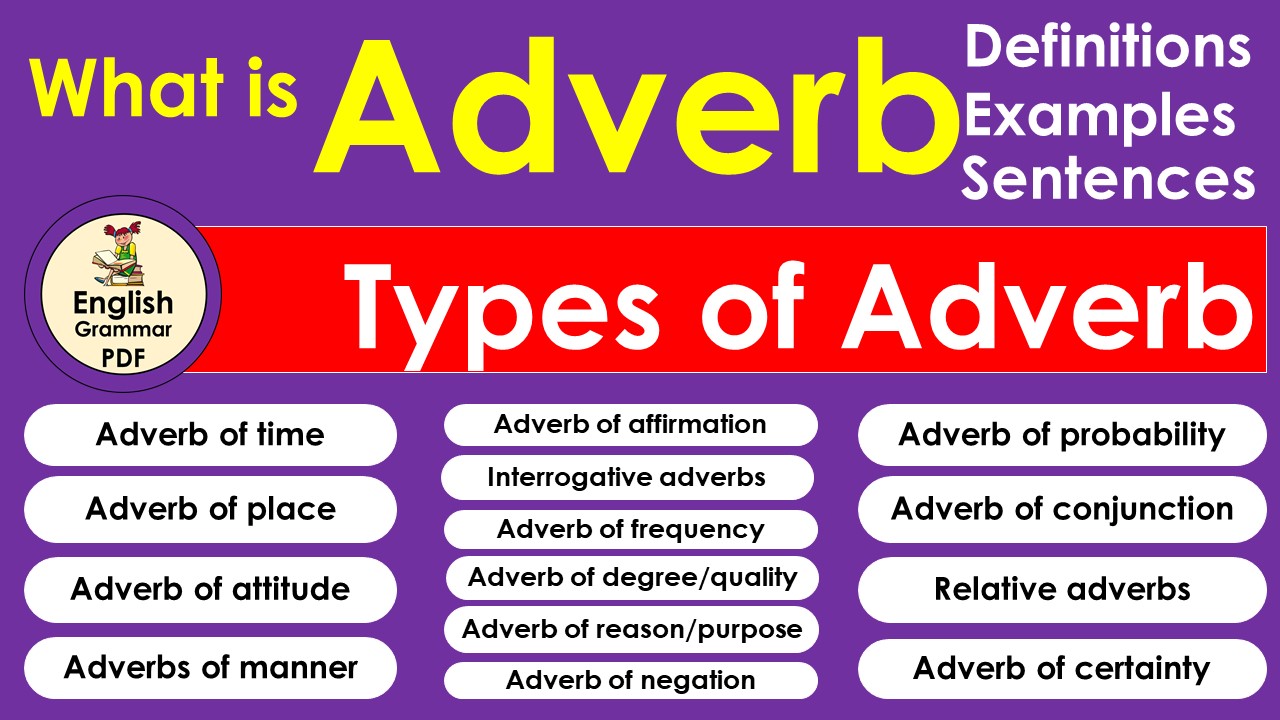
Adverb Types Of Adverbs Pdf With Examples English Grammar Pdf from englishgrammarpdf.com Definition of adverb of time: The adverb "loudly" in the 2nd sentence modifies the verb "sing" by giving us more information that the song is sung with a loud voice. Notice how the statement sounds like it belongs in a. Apparently, the sky is getting cloudy. Adverbs of time/frequency (when?) adverbs of time/frequency indicate time or frequency of the action in the sentence. While adverb clauses are slightly more. Later robin hood stole the king's crown. An adverb is a word that modifies (gives more information about) a verb in a sentence.
A word that tells the time of an action is called adverb of time.
When placed at the beginning of a sentence, an adverb clause is followed by a comma, as seen in these examples of adverb clauses: As you read the following adverb clause examples, you'll notice how these useful phrases modify other words and phrases by providing interesting information about the place, time, manner, certainty, frequency, or other circumstances of activity denoted by the verbs or verb phrases in the sentences. Notice how the statement sounds like it belongs in a. Note that all adverb clauses are subordinate clauses. An adverb used in this way may provide information about the manner, place, time, frequency, certainty, or other circumstances of the activity denoted by the verb or verb phrase. It is usually introduced by time adverbs. Adverb clauses, like all clauses, must contain a subject and a verb. Unless you run fast, you will miss the bus. She is singing a song. A sentence adverb starts the sentence and modifies the whole sentence. Before, after, as, when, while, until, as soon as, since, no sooner than, as long as etc. She is singing a song loudly. Adverb clauses modify the independent clause in a sentence.